
Water Safety for Kids: Essential Rules for Summer
Summer and water go hand in hand, whether it’s a backyard pool party, a lake trip with family, or a splash pad visit with friends, children naturally gravitate toward the water when the heat is on. And while these moments create some of the best memories of childhood, water also demands our full attention and respect.
The good news is that water safety for kids isn’t about fear, it’s about preparation. When children understand what to expect and know what to do, they can enjoy the water with confidence. With the right guidance, kids can learn to have fun and stay safe at the same time.
Understanding why water safety education matters
Drowning is one of the leading causes of unintentional injury in children, and it can happen quickly and quietly, even in familiar environments. What makes this especially important for families to understand is that many incidents happen when supervision seems sufficient but attention momentarily drifts.
Teaching water safety rules for kids does more than prevent accidents. It helps children develop situational awareness, teaches them to read their environment, and builds the habit of checking in with adults before making decisions near water. These are life skills that carry far beyond the pool or the beach.
It’s also worth knowing that different bodies of water come with different risks. A backyard pool behaves nothing like a lake, and a water park is a very different environment than the ocean. Each setting has its own set of conditions children need to understand before diving in.
Essential water safety rules for every setting
Pool safety for kids: what they need to know before they jump in
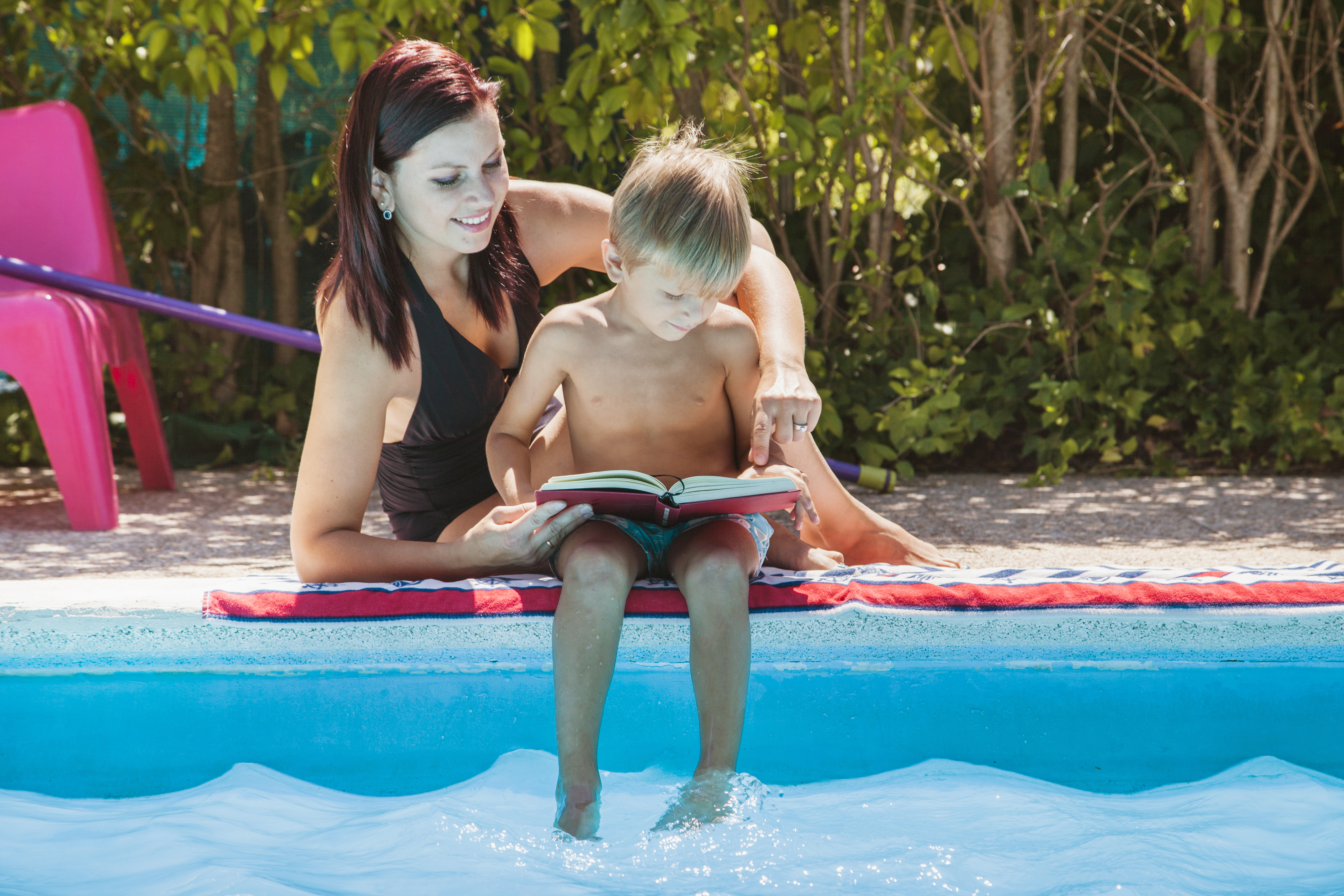
Residential pools, whether at your own home or a neighbour’s, are among the most common settings where children spend time in the water. A few key rules make a real difference here.
Children should always let an adult know before getting into any pool. Even for confident swimmers, the rule is non-negotiable. If a child is attending a pool party or visiting a friend’s house, they should know to identify which adult is responsible for watching the water, because “everyone watching” can quickly become no one watching at all.
Some important habits to build around pools include:
- No running on pool decks, slippery surfaces are one of the most common causes of falls near water
- Always look before jumping or diving to make sure no one is below
- Never push another person into the water
- Reach for a pool noodle or life ring if a friend is struggling, do not jump in after them; get an adult immediately
- Get out of the water at the first sign of lightning, thunder, or heavy rain
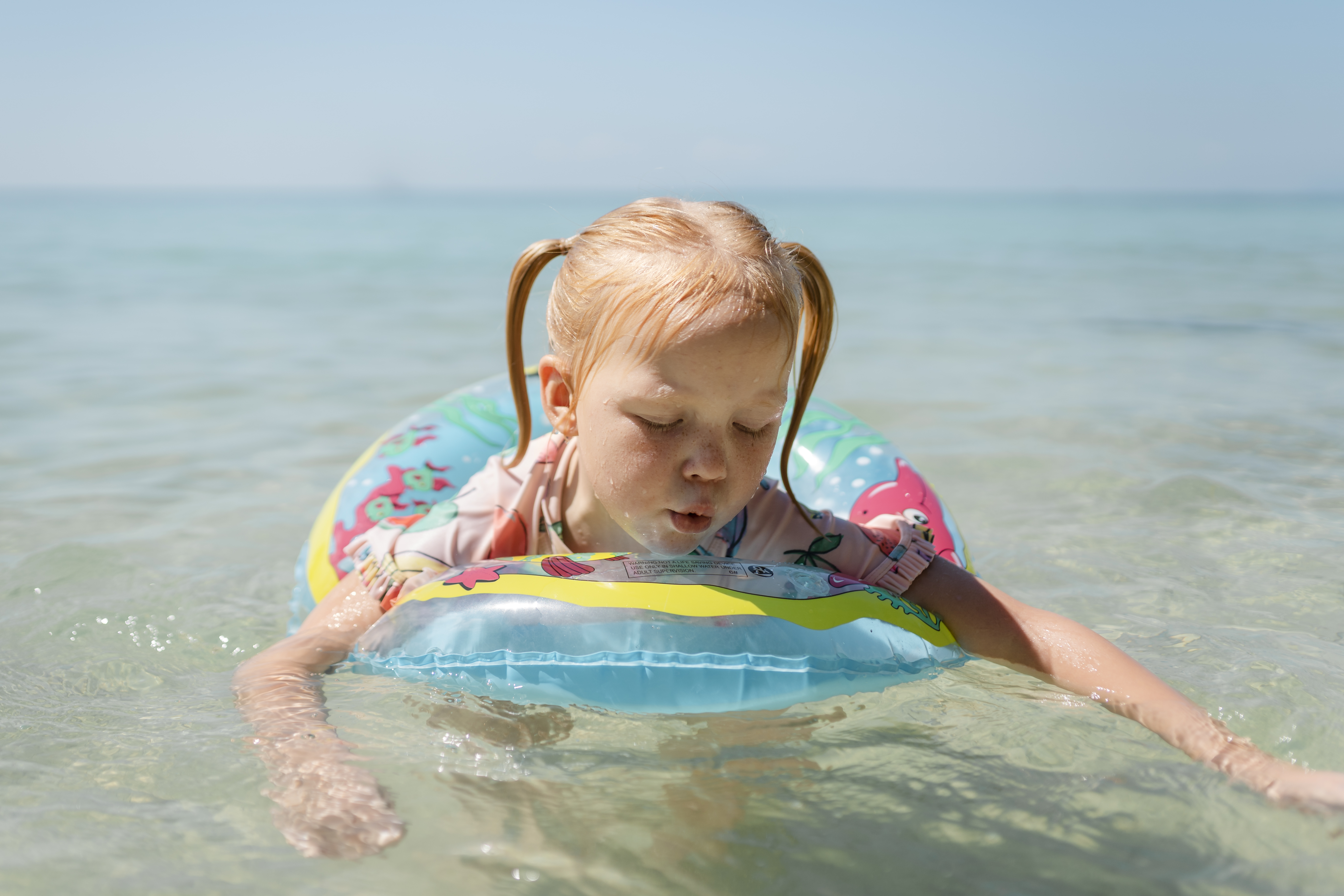
Children should also understand that inflatable toys and arm bands are not life jackets. They can provide comfort but should never replace adult supervision or proper flotation devices.
Open water: lakes, rivers, and oceans
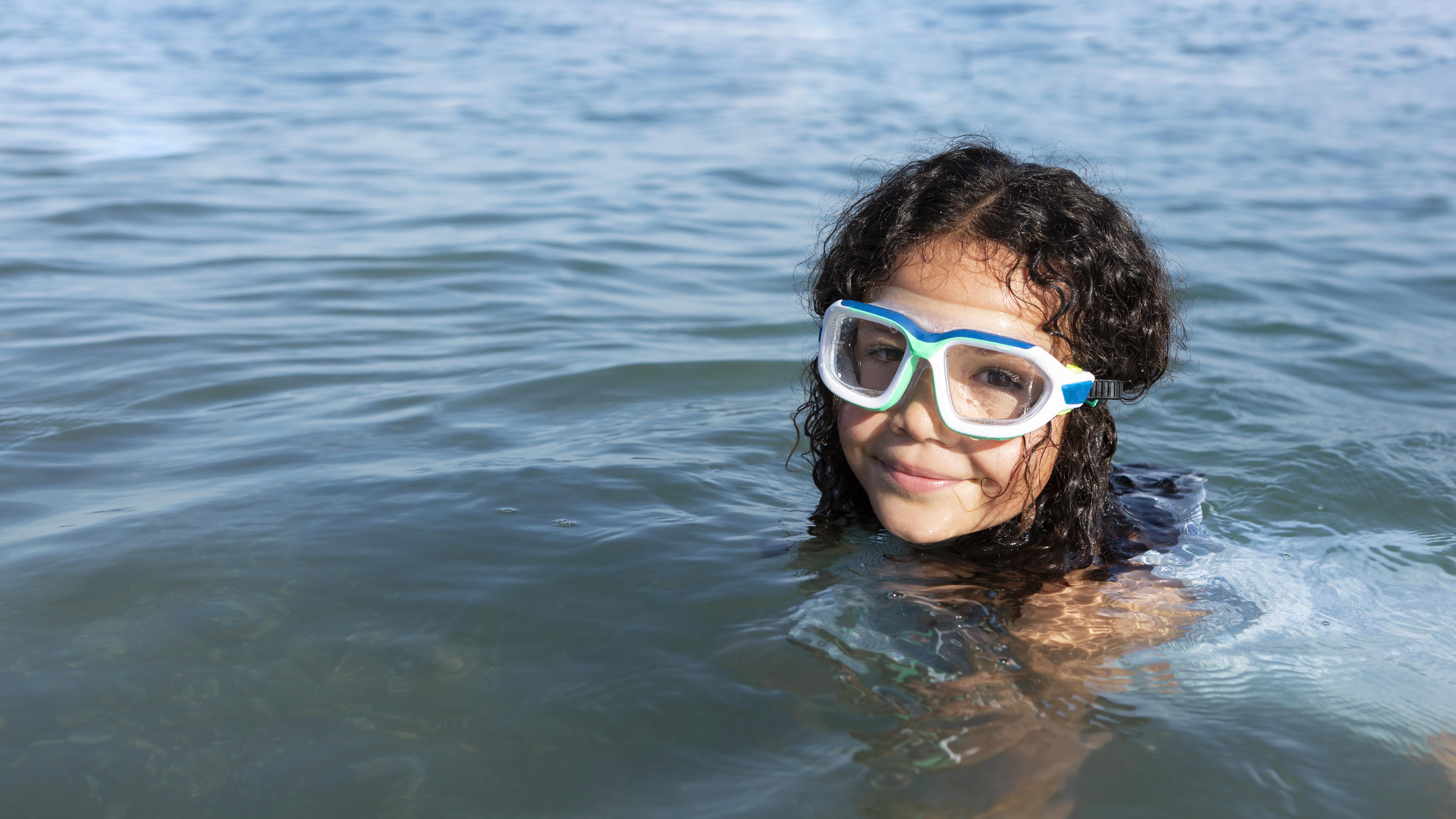
Open water presents a different set of challenges than a controlled pool environment, and this is something families often underestimate. Currents, unexpected drop-offs, and reduced visibility beneath the surface make natural bodies of water unpredictable, even for strong swimmers.
For children spending time at lakes, rivers, or the ocean, these water safety tips are important to revisit before each visit:
- Always ask a parent or guardian before entering the water, no exceptions
- Swim only in areas designated for swimming, and where lifeguards are present
- Stay within an agreed-upon depth, waist-deep is a common and reasonable limit for younger children
- Life jackets are required on boats and in deeper open water, regardless of swimming ability
- Waves and currents are stronger than they look; if caught in a current, stay calm, call for help, and wave arms above the head to signal for assistance
- If a friend or sibling appears to be in trouble, do not enter the water to help, shout for an adult or lifeguard immediately
Ocean swimming, in particular, introduces the concept of rip currents, which can catch even experienced swimmers off guard. Teaching children that the safest response to a strong current is to stay calm, swim parallel to shore, and call for help is a lesson that could save a life.
Water park and public pool safety tips for kids
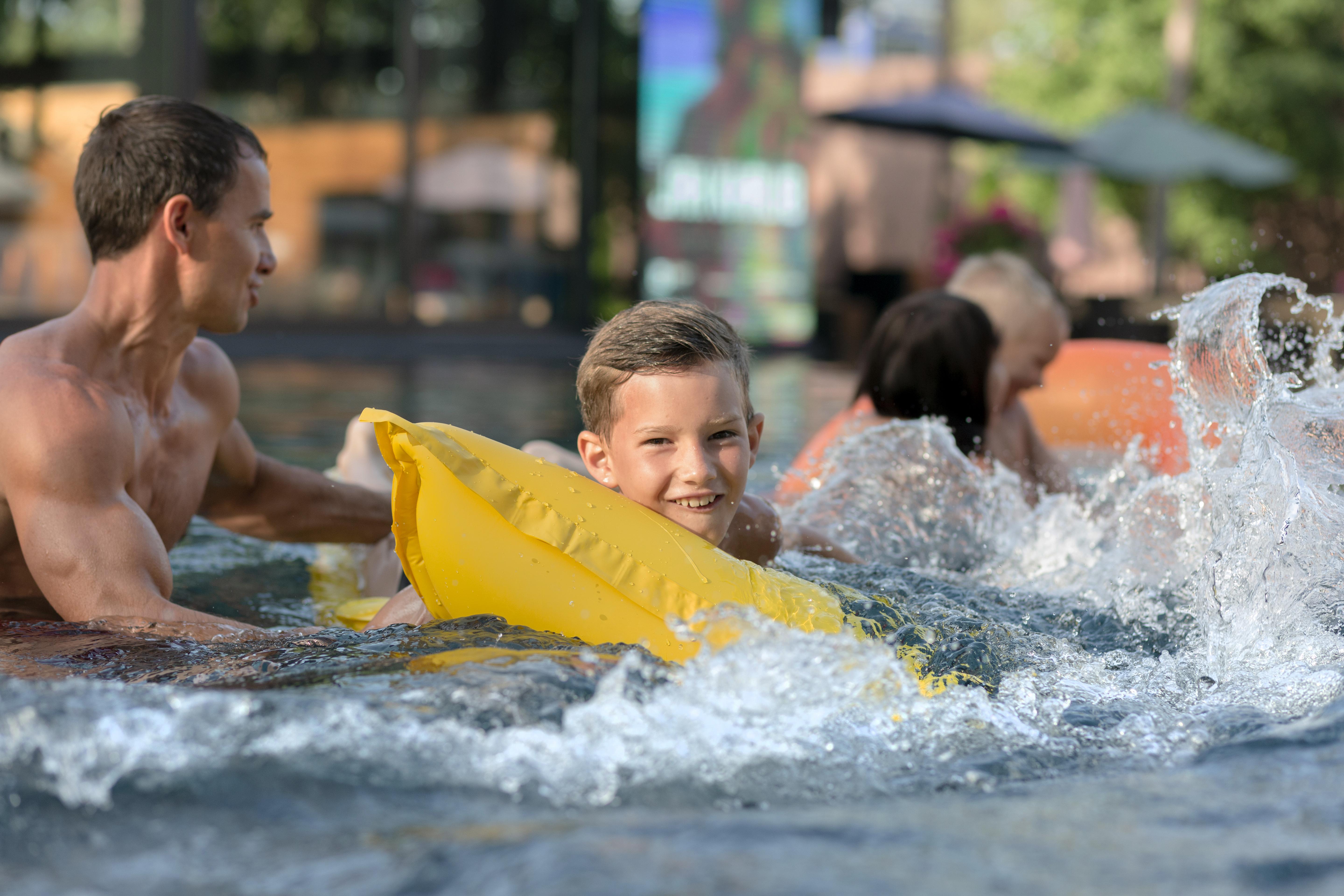
Water parks and busy community pools are exciting environments, but the combination of large crowds, wave pools, and varying depths can also be overwhelming for younger children or less confident swimmers. Before arriving, it’s worth reviewing a few practical habits:
- Read the posted rules at every attraction before getting in
- Know where the lifeguards are stationed at all times
- Stay in areas matched to the child’s age and swimming ability
- Take regular breaks, fatigue is a real risk and children don’t always recognize when they’re getting too tired
- Always know where parents or caregivers are sitting
Water parks often have varying water depths throughout the park. Teaching children to ask an attendant or lifeguard about water depth before jumping in, especially at slides or wave pools, is a habit worth building early.
Water safety activities for kids: making learning stick
One of the most effective ways to help children internalize water safety rules is to make the learning interactive and positive. Safety doesn’t have to feel like a lecture, and for most kids, it won’t be memorable if it does.
Here are some water safety activities for kids that families and educators can use to reinforce these skills in an engaging way:
- Practice “reach and throw” rescue techniques. Using a pool noodle or rope, children can practice extending help to a “swimmer in distress” without entering the water themselves. This builds the muscle memory of helping without jumping in.
- Go on a “safety walk” before swimming. Ask children to point out the lifeguard, the exit ladders, the life rings, and any posted rules before the swimming session starts. This turns observation into habit.
- Role-play common scenarios at home. Ask questions like: “What would you do if a friend slipped and fell in?” or “What do you do when you hear thunder?” Calm, low-stakes rehearsal helps children respond confidently in real moments.
- Enroll in structured swimming lessons. Beyond knowing the rules, physical skill in the water builds genuine confidence. Children who have practiced floating, swimming to an edge, and treading water are better prepared to respond to unexpected situations.
- Read and discuss water safety stories together. For younger children especially, picture books and age-appropriate stories that explore water scenarios can open conversations in a comfortable, natural way.
The goal of these activities isn’t perfection, it’s familiarity. The more often children think through these situations in a calm, supported environment, the more prepared they’ll be when it matters.
How parents and caregivers can reinforce water safety at home
Water safety isn’t a one-time talk, it’s an ongoing conversation that grows alongside a child’s independence. As children get older and start spending more time near water without direct parental supervision, those early lessons become even more important.
A few habits that help keep water safety top of mind throughout the summer:
- Refresh the rules at the start of every summer season. Children’s understanding grows each year, and so do the environments they’re exposed to.
- Model the behaviour you want to see. Children notice when adults skip the life jacket on the boat or ignore the “no running” sign. Consistent behaviour from adults sends a powerful message.
- Keep first aid knowledge current. Knowing how to respond in an emergency, including CPR basics, is something every parent and caregiver can benefit from, regardless of how experienced a swimmer their child is.
- Talk about it on the way there. A brief, calm conversation on the drive to the pool or beach is one of the most natural ways to revisit safety expectations without making it feel like a warning.
Structured children safety courses can also be an excellent complement to conversations happening at home. Programs designed specifically for kids bring together age-appropriate content, trained instructors, and a supportive environment where children can ask questions and practice skills with their peers.
Raising water-safe kids this summer
Water safety for kids is about building a foundation, one conversation, one lesson, and one swim session at a time. It’s not about creating anxiety or keeping children away from the water. It’s about equipping them with the awareness and skills to enjoy every splash, every wave, and every lake day with confidence.
At SOS 4 Kids, empowering children with real-life safety knowledge is at the heart of everything we do. Whether through structured programs for independent children, community partnerships, or resources for families, the goal is always the same: children who are prepared, confident, and ready to handle whatever comes their way.
*All Images by Freepik

