
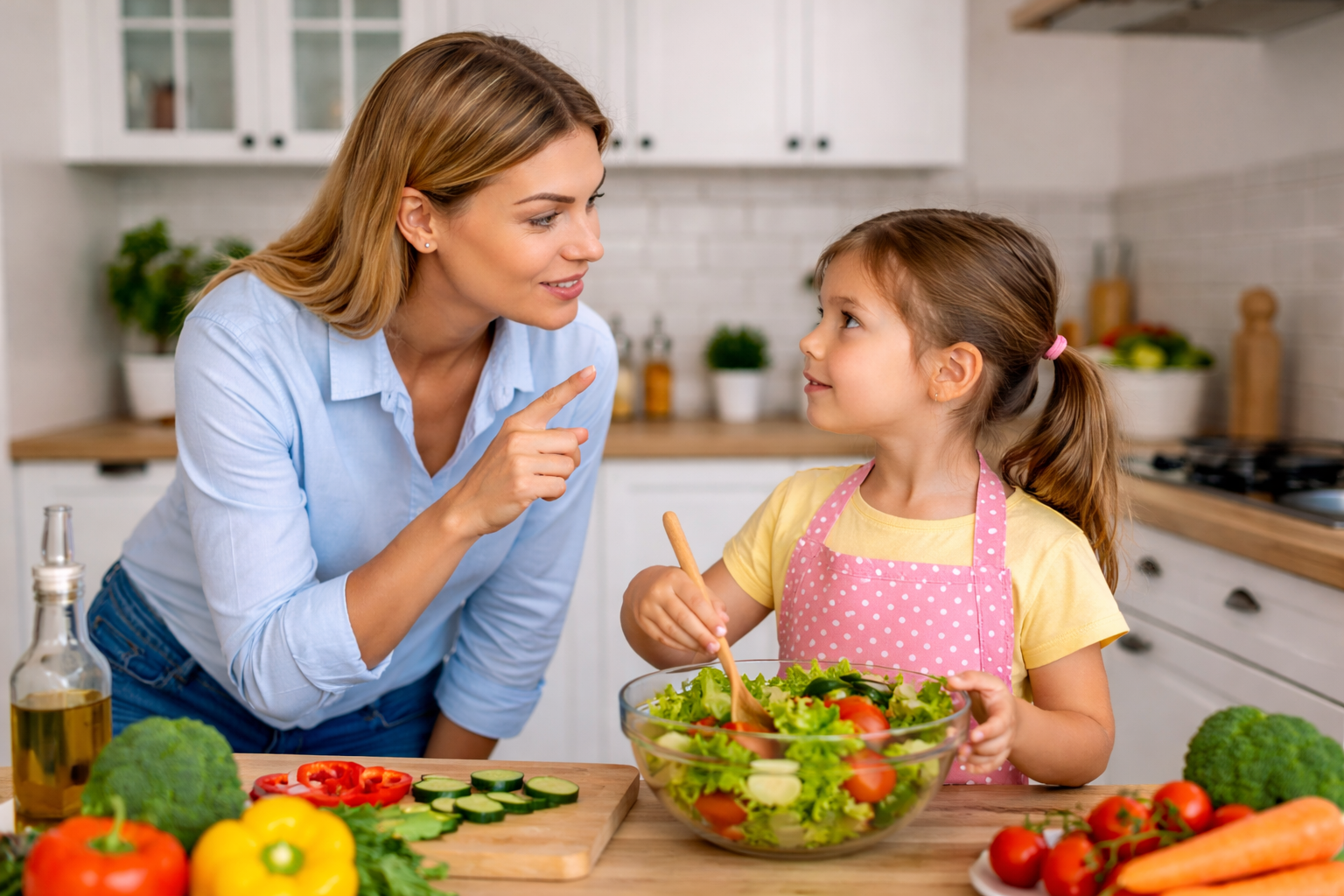
Kitchen Safety for Kids: Simple Rules Every Child Should Know
The kitchen is one of the most exciting rooms in the house for children. It’s where meals come together, where sweet smells fill the air, and where kids start learning one of life’s most valuable skills, how to prepare food. But the kitchen is also a place where accidents can happen if children aren’t taught how to move through it safely.
That’s the good news: kitchen safety for kids is about helping them belong in it.
Whether your child is just starting to help rinse vegetables or is already comfortable making a simple breakfast on their own, learning a few core safety habits early makes a big difference. These are the kind of practical knowledge that builds a foundation for independence. The same kind of independence that children’s safety programs are designed to support.
Why Kitchen Safety Matters More Than Parents Might Expect
It’s easy to assume that kitchen hazards are obvious. Of course a stove is hot, of course a knife is sharp. But children don’t yet have the automatic caution that adults develop through years of experience. What’s second nature to a grown-up is genuinely new territory for a child.
Burns, cuts, and slips are among the most common childhood injuries at home, and many of them happen in the kitchen. The goal is to give children real knowledge so they can participate safely, especially as they start spending more time at home on their own.
Many families begin thinking about kitchen safety when their children start becoming more independent: staying home alone after school, making their own snacks, or helping look after younger siblings. That’s exactly the right time to have these conversations.
Hygiene and Awareness
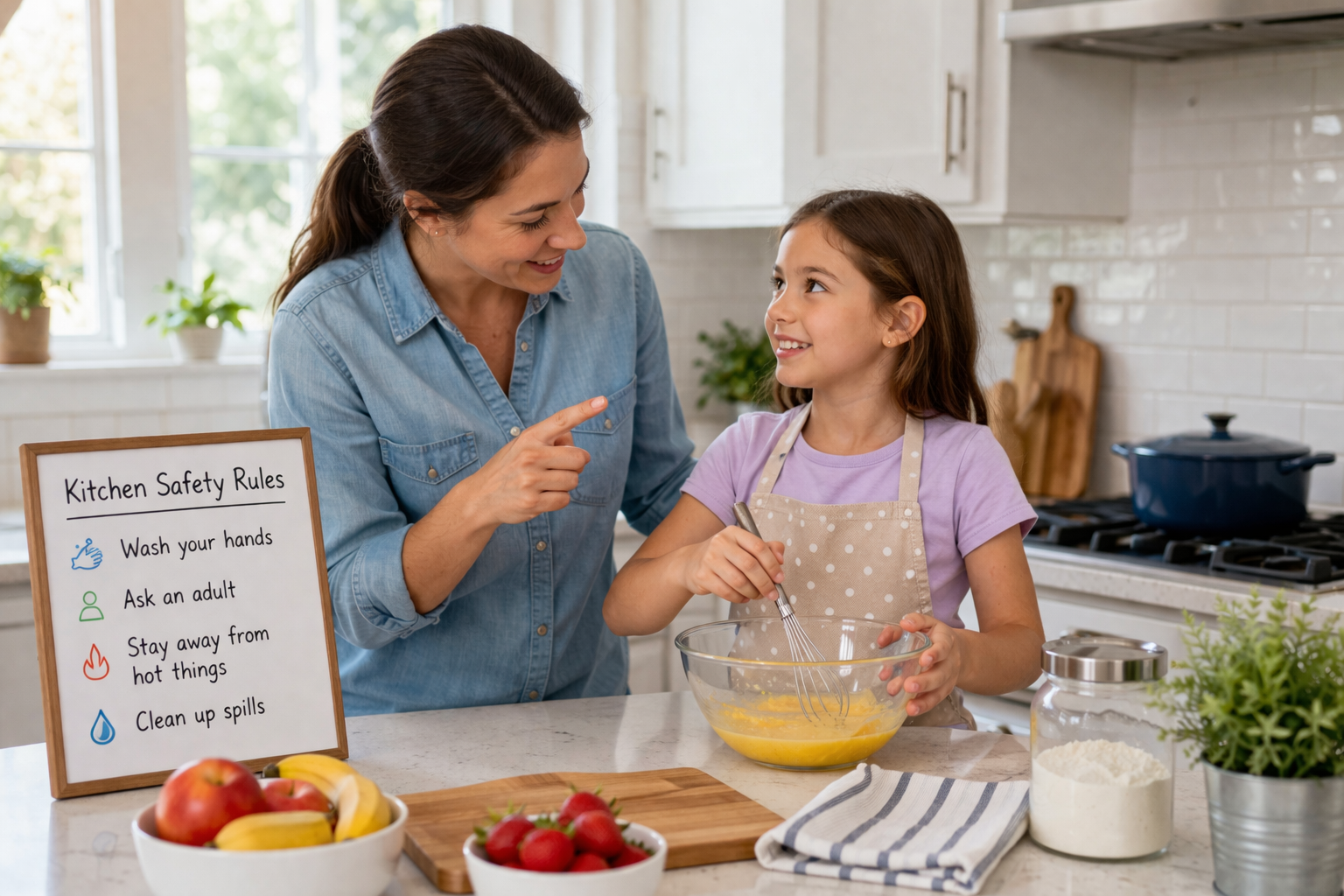
Before anything else, children should understand that safety in the kitchen begins before touching a single ingredient. Two habits set the tone for everything that follows.
Handwashing is the first. Children should wash their hands with soap and warm water for at least 20 seconds before handling food, after touching raw ingredients, and after any interruption, like using the phone or touching a pet. It takes less than a minute and prevents the spread of bacteria that can cause illness.
Awareness of space is the second. The kitchen has multiple hazards operating at once: a pot simmering on the stove, a knife left on the counter, a wet floor near the sink. Teaching children to slow down when they enter the kitchen, to look before reaching, and to ask before touching something unfamiliar builds a habit of attentiveness that protects them in every situation.
These foundational habits are simple. They’re also the ones most likely to prevent everyday accidents.
Knife Safety for Kids
Few topics make parents more nervous than letting children handle knives. That nervousness makes sense, but avoiding the conversation entirely can actually put children at greater risk. Kids who are never taught proper knife technique are more likely to handle sharp tools improperly when curiosity gets the better of them.
Here’s what children should understand about using knives safely:
- Always use a cutting board. Knives should never be used on an unstable or slippery surface. A stable cutting board keeps both the food and the child’s hands in a safe, controlled position.
- Grip matters. Children should hold food using what’s often called the “claw grip”, fingers curled inward so the knuckles, not the fingertips, guide the blade. This technique significantly reduces the chance of a cut.
- Cut away from the body. Always. No exceptions.
- Carry knives point-down. When moving a knife from one spot to another, the blade should point toward the floor, never outward or upward.
- A sharp knife is safer than a dull one. This surprises many people, but a dull blade requires more pressure and is more likely to slip. Children should use tools that are appropriate for the task, and adults should ensure those tools are properly maintained.
Knife safety for kids isn’t about giving a child a chef’s knife and stepping back. It’s about walking alongside them, demonstrating technique, and letting them practice in a supported environment. That’s exactly how confidence is built, gradually, with guidance.
Heat, Burns, and Staying Safe Around the Stove
Heat is one of the kitchen’s most significant hazards. Stovetops, ovens, steam from boiling pots, and even hot dishes fresh from the microwave can all cause burns quickly. Children should learn a few consistent habits when working near heat sources:
- Turn pot handles inward. A handle sticking out over the edge of the stove is a bump waiting to happen. Handles should always point inward or to the side.
- Use oven mitts, every time. Not a dish towel, not a sleeve. Proper oven mitts or pot holders protect hands and wrists from steam and direct heat.
- Never leave the stove unattended. If a child needs to step away from the stove, the burner should be turned off first.
- Respect steam. Steam burns can be more severe than contact burns because it’s invisible until it’s already causing damage. Children should be taught to lift pot lids away from themselves, letting steam escape to the far side.
For younger children, the rule is simple: no touching the stove without a grown-up present. For older children who are beginning to cook independently, the conversation becomes more nuanced, and more important.
Food Safety For Kids
Food safety for kids is often overlooked in favor of the more immediately dramatic hazards, burns and cuts tend to get more attention than bacteria. But foodborne illness is a very real risk, and children who understand basic food safety carry that knowledge for life.
Raw doesn’t mean ready. Raw eggs, raw flour, raw meat, and raw poultry can all carry bacteria that cause illness. Children should understand why tasting cookie dough or licking a spoon used for raw batter isn’t safe, not because adults are being overly cautious, but because the risk is genuine.
Keep raw and ready-to-eat foods separate. When helping prepare a meal, children should learn not to use the same cutting board or utensils for raw meat and then for vegetables or cooked food without washing them first.
Leftovers have a timeline. Food that’s been sitting out for more than two hours, or one hour in hot weather, shouldn’t be eaten. Refrigerators exist for a reason, and children who understand food storage become more responsible about it. When in doubt, throw it out. This simple rule prevents a lot of stomach upset. If something smells off, looks unusual, or has been in the fridge longer than expected, the safe choice is to discard it.
Building Kitchen Confidence Step By Step
Children develop kitchen skills, and kitchen safety habits, through practice and repetition, not through a single lesson. The goal for any parent or caregiver isn’t to teach everything at once, but to introduce skills progressively as children are ready for them.
A useful framework:
- Start with no-heat tasks. Washing produce, tearing salad greens, stirring cold ingredients, and setting the table are all meaningful contributions that carry very little risk.
- Introduce supervised cutting with appropriate tools. A child-safe knife or a butter knife is a reasonable starting point for younger children. Older children can move on to paring knives and chef’s knives with supervision.
- Involve children in cooking, don’t just have them watch. Hands-on experience, with a calm and encouraging adult nearby, builds real skill and real confidence.
- Discuss what to do when something goes wrong. Knowing how to respond to a small cut or a minor burn, who to call, what to do first, is just as important as avoiding the injury in the first place.
Preparing Children For Independence at Home
Kitchen safety is one part of a larger picture of home safety. As children grow toward independence, staying home alone, watching younger siblings, or simply navigating daily life without constant adult supervision, the skills they develop in the kitchen are connected to a much broader set of life skills.
Children’s safety courses for home alone safety address this comprehensively. Programs like the Home Alone Safety for Kids course, developed by SOS 4 Kids, give children the practical knowledge and confidence they need to handle everyday situations responsibly, including in the kitchen. These structured programs help children build real competence, not just a set of rules they’re told to follow.
The Kitchen Is a Place to Learn, and Belong
A child who understands why handwashing matters, how to hold a knife correctly, and what to do if they spill something hot is a child who is genuinely ready to participate in one of the most important daily activities of home life.
With patience, practice, and the right guidance, children can learn to move through the kitchen with the kind of calm confidence that serves them for years to come. That confidence grows, conversation by conversation and skill by skill, with adults who take the time to teach.

