
Safety Rules for Kids: Simple Lessons That Help Children Stay Safe
As children grow more independent, many parents find themselves asking the same question: Does my child know what to do if something goes wrong? It is a fair concern, and a common one. The good news is that safety is a skill, and like any skill, it can be taught, practiced, and built upon gradually over time.
Children do not need to be afraid of the world around them. What they need are simple, clear lessons that give them the confidence to handle everyday situations responsibly.
Why Teaching Safety Rules Early Makes a Difference
Many parents assume children will pick up safety habits naturally, through observation or common sense. While children are certainly capable learners, safety is one area where intentional teaching makes a real difference.
Children who are taught clear safety rules are better equipped to stay calm in unexpected situations. When a child knows what to do before a stressful moment happens, they are far less likely to panic. That ability to act confidently is something structured, age-appropriate safety education actively develops, and it is a skill that stays with children long after the lesson ends.
Starting these conversations early also helps normalize safety as a regular topic in your household. When children grow up understanding that talking about safety is just a normal part of family life, they are more likely to ask questions, flag concerns, and communicate openly with trusted adults when it matters most.
Children’s safety courses play a valuable role here. Programs designed specifically for young learners use age-appropriate language, real-life scenarios, and hands-on activities to make these lessons stick in a way that a single conversation simply cannot replicate.
Home Safety: The Rules Children Use Most
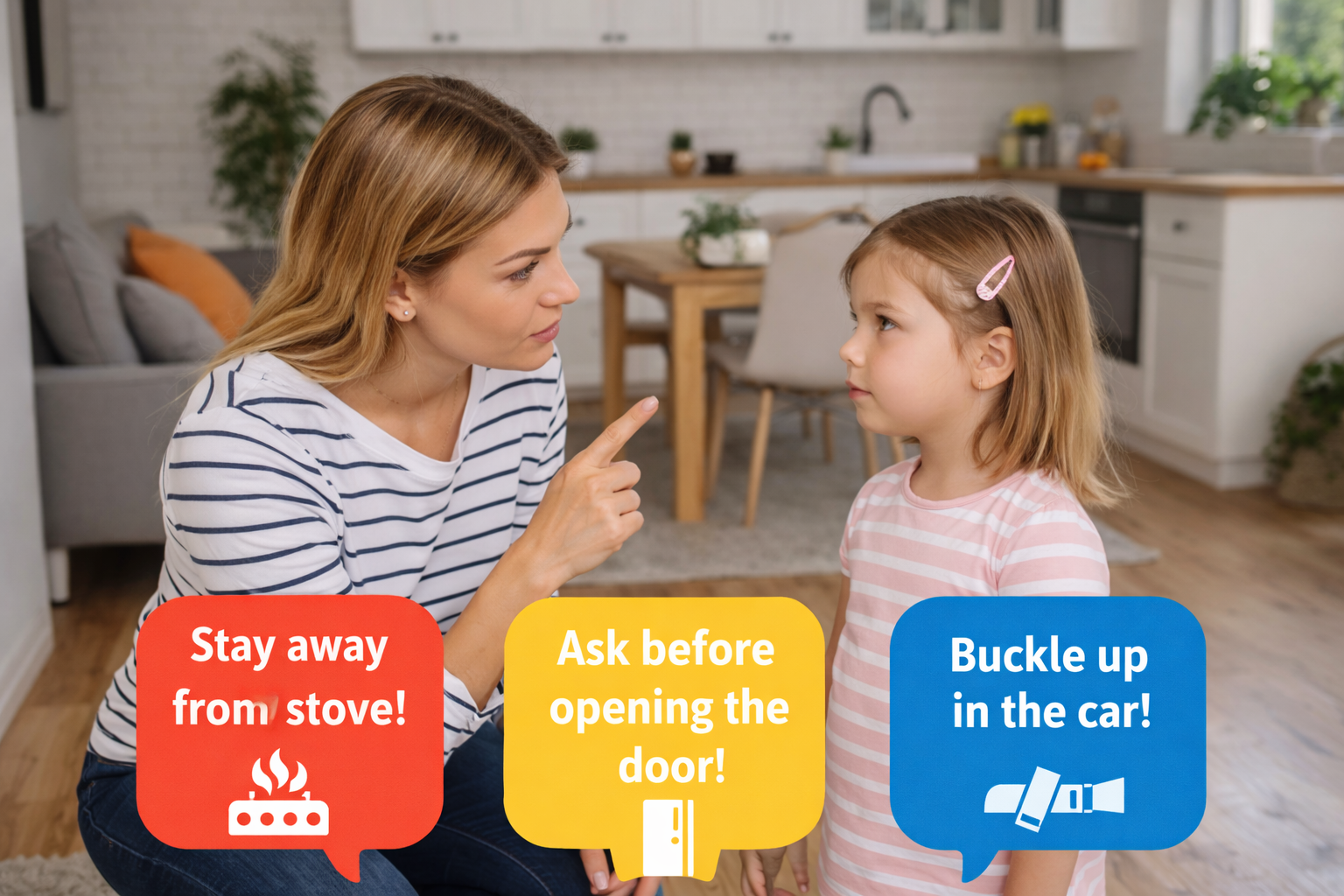
Home is where children spend most of their time, and it is also where many everyday safety situations unfold. Teaching home safety rules is one of the most practical investments a family can make. Here are some foundational rules every child should understand:
- Know your emergency contacts. Every child should be able to recite at least one trusted adult’s phone number from memory, along with the local emergency number. Writing these down on a visible card at home is a helpful backup.
- Never open the door to strangers. When a child is home alone, even briefly, they should know not to open the door to anyone they do not recognize, and never reveal to a caller or visitor that they are by themselves.
- Respect hazardous areas. Children should understand that certain parts of the home, near the stove, cleaning products, or electrical panels, require adult supervision. This is not about fear; it is about knowing and respecting boundaries.
- Always check in with a trusted adult. Whether heading outside, answering a call, or noticing something unusual, developing the habit of checking in builds both safety awareness and open communication.
These rules are most effective when they are rehearsed. Walking through scenarios together, “What would you do if the smoke alarm went off?” or “Who would you call if you got hurt?”, helps children build real recall rather than surface-level knowledge they quickly forget.
Being Home Alone: Preparing Children for Independence
One of the most significant milestones in a child’s growing independence is spending time at home alone. For many families, this begins gradually, perhaps just thirty minutes after school before a parent arrives home. But even short windows of time require real preparation.
It is normal for both parents and children to feel a mix of excitement and nerves about this milestone. Children who have completed a structured home alone safety program tend to feel far more prepared, and parents tend to feel far more confident. A well-prepared child knows how to:
- Lock and secure the home properly when they arrive
- Contact a trusted adult if plans change or something unexpected happens
- Respond calmly if someone knocks at the door or calls unexpectedly
- Handle minor situations, like a small cut or a spilled mess, without panicking
- Recognize the difference between something they can manage and something that needs an adult
Programs like SOS 4 Kids’ Home Alone Safety for Kids were designed specifically for this stage of childhood. The program covers the practical, real-world skills that help children feel genuinely ready for independent time at home.
First Aid Awareness: Knowing When and How to Get Help
Children do not need to become first aid professionals. But having a basic awareness of what to do in a minor emergency, and knowing when to call for help, is a genuinely valuable life skill that every child can develop.
Even young children can learn to stay calm in an unexpected moment, recognize when a situation is beyond what they can handle alone, and know exactly who to call and what to say. Some age-appropriate first aid concepts worth introducing include:
- Breathe first, then act. In any emergency, taking a slow breath before reacting leads to better decisions. Children can practice this habit even in everyday low-stress situations.
- Do not move someone who may be seriously hurt. If a child witnesses a fall or injury, staying calm, staying nearby, and calling for help is often the safest first response.
- Learn the signs of a serious emergency. Difficulty breathing, unresponsiveness, or significant bleeding are clear signals to call emergency services immediately, not to try to manage alone.
- Use your voice while you wait. Reassuring an injured person calmly while waiting for adult help is something every child can do, and it genuinely makes a difference.
It is also important to reassure children that calling for help is never the wrong choice. Many kids hesitate because they worry about overreacting. Let them know that reaching out quickly, even when unsure, is always better than waiting too long.
Building a Safety-First Mindset at Home
Safety education does not live exclusively inside a classroom or program. Some of the most meaningful safety learning happens in everyday moments between children and the adults who care for them.
A few simple ways to reinforce safety rules for kids at home:
- Make it an ongoing conversation. Revisit safety topics as children grow and take on new levels of independence. A single talk is a starting point, not a finish line.
- Practice, don’t just explain. Role-play scenarios together during calm, relaxed moments. Ask “What would you do if…?” questions and talk through answers together.
- Celebrate good judgment. When a child checks in as expected, asks before going somewhere new, or flags something that felt wrong, acknowledge it. Positive reinforcement builds lasting habits.
The goal is never to raise fearful children. It is to raise children who feel capable, aware, and confident in their ability to look after themselves and others.
Raising Confident Kids
Teaching safety is one of the most meaningful things a parent, educator, or caregiver can do. It is not about covering every worst-case scenario, it is about giving children a foundation of knowledge and confidence they can carry with them as they grow.
Children’s safety courses offer a structured, engaging way to deliver these lessons in a format children actually respond to. At SOS 4 Kids, every program is designed with both children and parents in mind, rooted in real experience, built around practical skills, and delivered in a way that builds confidence rather than fear. Whether your child is approaching their first time home alone or simply ready to learn more about staying safe, there is never a wrong time to start.

