

How to Teach Kids About Safety Without Creating Fear
As parents, we all want to keep our children safe. But how do we prepare them for the real world without filling them with worry? How do we teach kids about safety in a way that builds confidence rather than anxiety? It’s a delicate balance, but one that’s absolutely achievable with the right approach.
The truth is, children who learn safety skills in a supportive, calm environment become more capable and self-assured. They’re better equipped to handle challenges and make smart decisions. The key is teaching safety as empowerment, not as a series of scary warnings. When done well, children’s safety courses and home-based learning can give kids the tools they need without creating unnecessary fear.
Why safety education matters, and why the approach makes all the difference
Children naturally become more independent as they grow. They walk to a friend’s house, stay home alone for short periods, or babysit younger siblings. These are normal, healthy milestones. But with independence comes responsibility, and kids need practical knowledge to navigate these situations safely.
The problem arises when safety education focuses too heavily on worst-case scenarios. When we constantly emphasize danger, we risk creating anxious children who see threats around every corner. This doesn’t make them safer, it makes them scared. Children who are filled with fear may freeze in emergency situations rather than respond confidently.
On the other hand, children who learn safety skills through practice and positive reinforcement develop a sense of capability. They understand that while risks exist, they have the knowledge and skills to handle them. This is the foundation of effective kids safety education.
Start with age-appropriate information
One of the biggest mistakes parents make is sharing information that’s too complex or detailed for their child’s developmental stage. A six-year-old doesn’t need the same conversation about online safety that a thirteen-year-old requires. When we overwhelm younger children with concepts they can’t fully grasp, we create confusion and anxiety.
For younger children, safety lessons should be simple and concrete. Focus on specific actions they can take. For example, instead of explaining all the potential dangers of talking to strangers, teach them the simple rule: “Always check with me before you talk to someone you don’t know when you’re by yourself.” This gives them a clear action to take without dwelling on frightening possibilities.
As children grow older, you can gradually introduce more nuanced concepts. Pre-teens might be ready to discuss internet safety, while teenagers can understand more about situating themselves safely in social situations. The key is to match the information to what your child can understand and apply at their current stage of development.
Use specific rules
Children often struggle with broad safety advice. Telling a child “be careful” or “don’t talk to strangers” can be confusing. After all, they watch you chat with the cashier at the grocery store or speak to a neighbor you’ve just met. These generalizations leave kids uncertain about what they should actually do.
Rather than “don’t talk to strangers,” try “when you’re at the park by yourself, stay where I can see you. If someone you don’t know tries to talk to you, come get me right away.” This gives your child a concrete action plan.
The same applies to other safety situations. Instead of “be safe online,” explain “never share your full name, address, school name, or phone number with someone you only know through the internet.” Specific rules are easier to remember and follow. They also reduce anxiety because children know exactly what’s expected of them.
Examples of specific safety rules that work:
- When home alone, don’t open the door for anyone unless it’s someone on our approved list, and always call me to check first if you’re unsure.
- If you get separated from me at the store, stay where you are for one minute, then find an employee wearing a name tag and ask them to help you find me.
- Before going to a friend’s house, tell me the address, who will be there, and when you’ll be home. Always check in when you arrive.
- If someone asks you to keep a secret that makes you uncomfortable, tell me right away, surprises for birthdays are okay, but feelings of worry should never be kept secret.
Focus on what to do, not what might happen
This is perhaps the most important principle in teaching kids about safety without creating fear. When we emphasize potential dangers, we activate our children’s worry responses. When we focus on practical skills and actions, we activate their problem-solving abilities.
For instance, when teaching fire safety, spend less time describing how dangerous fires are and more time practicing what to do. Show them where the smoke alarms are. Walk through the escape routes together. Practice the “stop, drop, and roll” technique. Make it a game or a drill. This approach builds muscle memory and confidence.
The same applies to other safety situations. If you’re teaching your child what to do if they get separated from you in a store, practice the steps: stay calm, find an employee wearing a name tag, ask for help. You might even role-play this at home. Children who have practiced these actions are far less likely to panic in the actual situation.
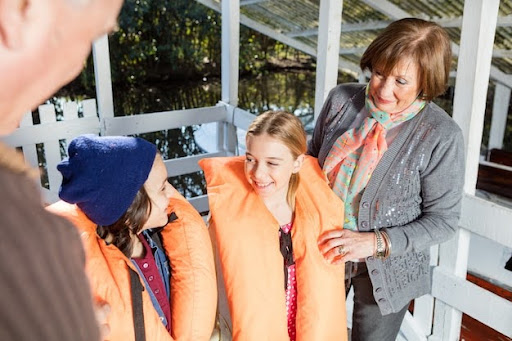
Make safety learning interactive and positive
Children learn best when they’re actively engaged, not when they’re sitting through lectures about danger. Children’s safety courses that incorporate hands-on activities, role-playing, and practice scenarios are far more effective than those that simply list rules.
Ways to make safety practice engaging at home:
- Create a safety scavenger hunt where children find and identify safety items like fire extinguishers, first aid kits, and emergency contact lists throughout your home.
- Role-play phone calls where your child practices giving your address to emergency services or calling a trusted neighbor for help.
- Set up a “what would you do?” game during family time where you present simple scenarios and let your child talk through their response.
- Practice basic first aid techniques together using bandages on stuffed animals or teaching them how to apply pressure to a pretend cut.
- Make a family emergency plan together, letting your child help choose the meeting spot and pack an emergency kit.
Avoid catastrophic language
The words we choose matter enormously. It’s one thing to say “wear your helmet when you ride your bike because it protects your head.” It’s quite another to say “wear your helmet or you could crack your skull open and die.”
Both statements are technically true, but the second one creates fear without adding any useful information. Children who hear catastrophic language may develop anxiety about everyday activities. They might become overly cautious or refuse to try new things.
Instead, frame safety rules in positive terms. “Your seatbelt keeps you secure in the car” is better than “you’ll fly through the windshield without your seatbelt.” “We lock the door to keep our home private and safe” is better than “someone might break in and hurt us.” These positive frames teach the same safety concepts without creating mental images of terrible outcomes.
Raising confident, capable, and safety-aware children
When we approach children’s safety courses and home-based safety education with a calm, positive, practical mindset, we empower our children rather than scare them. We give them real skills they can use, not just a list of things to fear.
The goal is to raise children who are both cautious and confident, children who understand basic safety principles and can apply them in real situations. This happens when we focus on specific, actionable skills, use positive language, make learning interactive, and maintain open communication.
*All Images by Freepik

