
Fire Safety for Kids: Simple Lessons That Can Save Lives
House fires can happen quickly and without warning. While modern smoke alarms provide crucial early detection, children need to know how to respond when they hear that alarm. They also need to understand fire prevention: why certain items are dangerous and how everyday choices can keep their homes safe.
Many children spend time home alone or in the care of older siblings. During these moments of independence, fire safety knowledge becomes even more critical. A child who knows not to use the stove without permission, what to do if they smell smoke, or how to exit the home safely has skills that could save their life and the lives of others.
Essential fire safety concepts every child should know
There are several core concepts that form the foundation of effective fire safety education. These lessons are simple enough for young children to grasp yet important enough to protect them throughout their lives.
Stop, drop, and roll
This is perhaps the most well-known fire safety technique, and for good reason. If a child’s clothing catches fire, their natural instinct might be to run or panic. However, running makes flames worse by feeding them oxygen. Instead, children need to remember three simple actions: stop where they are, drop to the ground, and roll back and forth to smother the flames.
Practice this technique with your child. Make it into a game so they remember the steps without associating it with fear. The muscle memory they develop through practice could be lifesaving in a real emergency.
Understanding smoke alarms and what they mean
Children should recognize the sound of a smoke alarm and understand that it means they need to leave the house immediately. Explain that smoke alarms are designed to wake them up at night and alert them to danger during the day.
Some children are frightened by the loud sound of smoke alarms. Help them overcome this fear by explaining that the alarm is their friend, it’s warning them to get to safety. Consider pressing the test button on your smoke alarm occasionally so children become familiar with the sound in a non-emergency context.
The dangers of fire sources
Matches, lighters, candles, and stoves hold a natural fascination for many children. Rather than simply saying these items are “off-limits,” help children understand why they’re dangerous. Explain that fire is a tool that only adults should use, and that even adults are very careful when using it.
Set clear rules about fire sources in your home:
- Matches and lighters should be stored out of reach and never touched without adult permission.
- The stove and oven are adult-use only until a child has been properly trained and given permission.
- Candles should never be lit by children, and kids should stay away from open flames.
- If a child finds matches or a lighter, they should tell an adult immediately rather than playing with them.
Creating and practicing a family fire escape plan
Knowing fire safety tips for kids is important, but practicing them is what truly prepares children for emergencies. A family fire escape plan is essential, and regular practice ensures everyone knows exactly what to do.
Mapping out escape routes
Sit down with your children and draw a simple map of your home. Mark all possible exits from each room, including windows. Identify at least two ways out of every room, particularly bedrooms where family members sleep. This redundancy is crucial because one exit might be blocked by fire or smoke.
Show children how to open windows and remove screens if necessary. If you have escape ladders for upper-floor bedrooms, teach older children how to use them safely. The goal is to ensure that no matter where a fire starts, everyone has a clear path to safety.
Choosing a family meeting spot
Designate a specific meeting place outside your home where everyone will gather after escaping. This might be a mailbox, a particular tree, or a neighbor’s driveway. The meeting spot should be far enough from the house to be safe but close enough that young children can reach it easily.
Explain why this meeting spot matters. It allows parents to quickly account for all family members without risking going back into a burning building to search for someone who’s already safely outside.
Practicing the plan regularly
Fire drills shouldn’t be a one-time event. Practice your escape plan at least twice a year, including once at night when everyone is sleeping. Use your smoke alarm as the starting signal so children connect that sound with the need to evacuate immediately.
Time your drills to see how quickly everyone can get out and reach the meeting spot. After each practice, discuss what went well and what could be improved. Did younger children need help with windows? Were any routes unclear? Make adjustments based on what you learn.
Here are some important points to emphasize during fire drills:
- Get out fast and stay low. Smoke rises, so cleaner air is near the floor.
- Touch doors with the back of your hand before opening them. If a door is hot, use a different exit.
- Never go back inside for toys, pets, or belongings. Once you’re out, stay out.
- Call for help from outside the home, not from inside.
Making fire safety education engaging and memorable
Children learn best when they’re actively engaged. Fire safety doesn’t have to be taught through lectures or scary warnings. There are many creative, positive ways to teach these crucial lessons.
Interactive activities and games
Turn fire safety concepts into games your children will enjoy. Create a scavenger hunt where kids locate all the smoke alarms in your home. Role-play scenarios where one family member is the “firefighter” helping others exit safely. Use stuffed animals or dolls to act out fire safety rules.
Coloring books with fire safety themes combine creativity with learning. Many fire departments offer free fire safety materials designed specifically for children. These resources present information in age-appropriate, engaging formats.
Using stories to teach lessons
Stories help children understand abstract concepts in concrete ways. Create simple narratives about characters who demonstrate good fire safety habits. For example, tell a story about a child who heard the smoke alarm, remembered to stay low while crawling to the door, and met their family at the designated meeting spot.
You can also read children’s books about fire safety together. Many well-illustrated books make these lessons accessible and less intimidating for young children.
Learning from firefighters
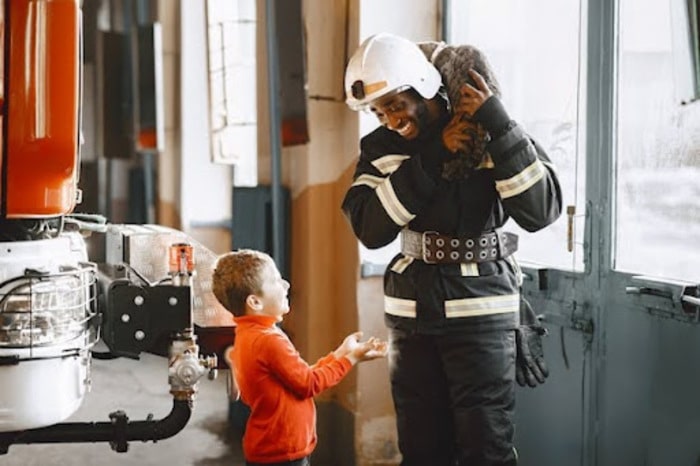
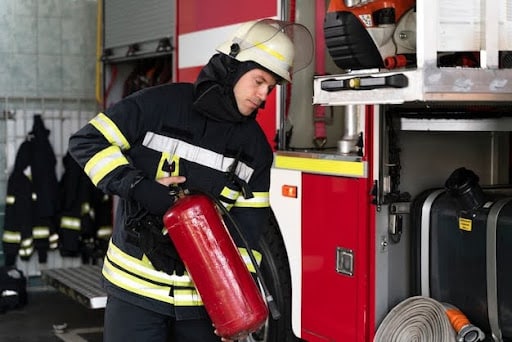
Many fire departments offer station tours or school visits where firefighters teach fire safety. These experiences are incredibly valuable. Children see firefighters in full gear, which helps reduce any fear they might have of these protective uniforms. They also hear safety messages from community helpers they admire and trust.
If your local fire department offers educational programs, take advantage of them. Children’s safety courses that include fire safety components provide structured, professional instruction that reinforces what you’re teaching at home.
Preparing children for real-world safety
Tailor your fire safety education to your child’s age and understanding.
- Younger children need simpler, more concrete lessons, while older kids can handle more detailed information and responsibility.
- For children ages 5-7, focus on basic rules: don’t touch matches or lighters, get out quickly if you hear the smoke alarm, and know your family meeting spot.
- Children ages 8-10 can understand more complex concepts. Teach them how to test doors for heat, why staying low helps them breathe better, and what to do if they’re trapped in a room. They can also begin learning how to call emergency services and provide important information like their address.
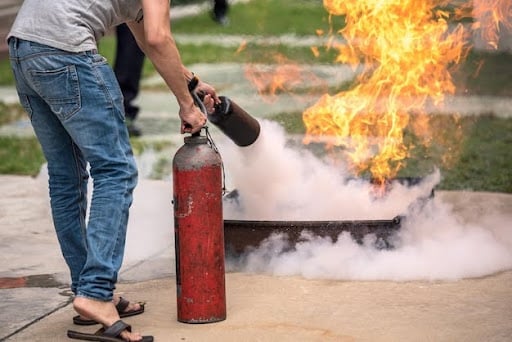
- Pre-teens and teenagers can take on more responsibility. They might learn to use a fire extinguisher properly, understand different types of fires, and take leadership roles in helping younger siblings during drills.
Fire safety education is one of the most valuable gifts you can give your child. These simple lessons, practiced regularly and taught with confidence rather than fear, equip children with skills that can truly save lives.
*All Images by Freepik

