
What Age Can You Start Babysitting? Safety and Responsibility Guidelines
One of the most common questions parents and young teens ask is: how old do you have to be to start babysitting? It’s a perfectly reasonable thing to wonder. Babysitting is often the first real job a young person takes on, and with that comes genuine responsibility for the safety and well-being of another family’s child.
The honest answer is that there’s no single number that applies across the board. The right babysitting age depends on a combination of maturity, skill, and preparation. Some young people are genuinely ready at 11 or 12. Others benefit from waiting a little longer. What matters most is whether the young person has the knowledge, confidence, and good judgment to handle what babysitting actually requires.
The good news is that readiness can be built. With the right guidance and training, children can grow into the role gradually, starting with smaller responsibilities and working toward more independence over time.
Is There a Legal Babysitting Age in Canada?
Many parents are surprised to learn that there is no single legal babysitting age in Canada that applies uniformly across the country. Unlike driving or voting, babysitting is not governed by one federal law. Instead, the guidance tends to come from provincial child welfare frameworks, child development research, and community standards.
Most child development experts and safety organizations suggest that 11 or 12 years old is a reasonable starting point for short babysitting jobs in familiar environments. Below that age, the cognitive and emotional demands of caring for another child can simply be too much because babysitting requires calm decision-making under pressure, which develops with time.
That said, age is a starting point, not a guarantee of readiness. A 12-year-old who has completed a recognized babysitting course and practiced basic first aid is in a very different position than a 14-year-old with no training. Certification helps bridge that gap in a meaningful way.
Ontario Babysitting Age: What Families Should Know
In Ontario, there is no specific law that sets a minimum babysitting age. However, child protection guidelines do provide a helpful framework. Ontario’s child welfare legislation generally suggests that children under 10 should not be left alone unsupervised, and by extension, a child of similar age would not typically be considered ready to supervise others.
Many families and community organizations in Ontario use 12 as a practical benchmark for when a young person might reasonably start babysitting. Some begin even younger by starting as a “mother’s helper” , assisting a parent who is present in the home. This can be a wonderful way to build experience gradually before taking on full responsibility.
For parents in Ontario looking to prepare a young teen for babysitting, programs like the Canadian Red Cross Babysitting course are a trusted starting point. SOS 4 Kids delivers this course as a certified Red Cross training partner in Ontario communities, giving young people the structured preparation they need before their first solo job.
Babysitting Age in Alberta: Regional Considerations
Like Ontario, Alberta does not have a law that specifies a fixed legal babysitting age. Alberta’s child welfare guidelines focus on whether a child is left in circumstances that could cause harm , and those guidelines apply both to the child being cared for and to the young person doing the caring.
Alberta’s Office of the Child and Youth Advocate and various family resource programs generally align with national recommendations: around 11 to 12 years old as a minimum, with readiness assessed based on maturity and training rather than age alone.
Parents in Alberta should look for babysitting training opportunities in their communities. Many YMCAs, municipalities, and youth organizations across the province offer structured safety courses for young people in this age range.
Babysitting Age in BC: What Parents Need to Know
British Columbia similarly has no fixed legal age for babysitting written into provincial law. BC’s child safety guidelines emphasize individual readiness , a recognition that children develop at different rates and that the right age for babysitting in BC, as elsewhere, depends on the whole picture.
The BC government recommends that children under 10 not be left alone at home, and that the decision about when a young person is ready to babysit others should be made thoughtfully. Starting with supervised opportunities, such as helping out at a family friend’s home with a parent nearby, is a practical approach many BC families take.
What Readiness Actually Looks Like
Since the legal age for babysitting in Canada isn’t defined by a single number, it’s worth thinking about what readiness actually involves. Age and maturity are related, but they’re not the same thing. A young person who is ready to babysit can typically do the following:
- Stay calm when something unexpected happens, like a child falling or becoming upset
- Follow instructions reliably, including bedtime routines, dietary restrictions, and household rules
- Know when a situation is beyond their control and ask for adult help without hesitation
- Keep their focus on the children in their care, not on their phone or their own interests
The Role of Babysitting Training and Certification
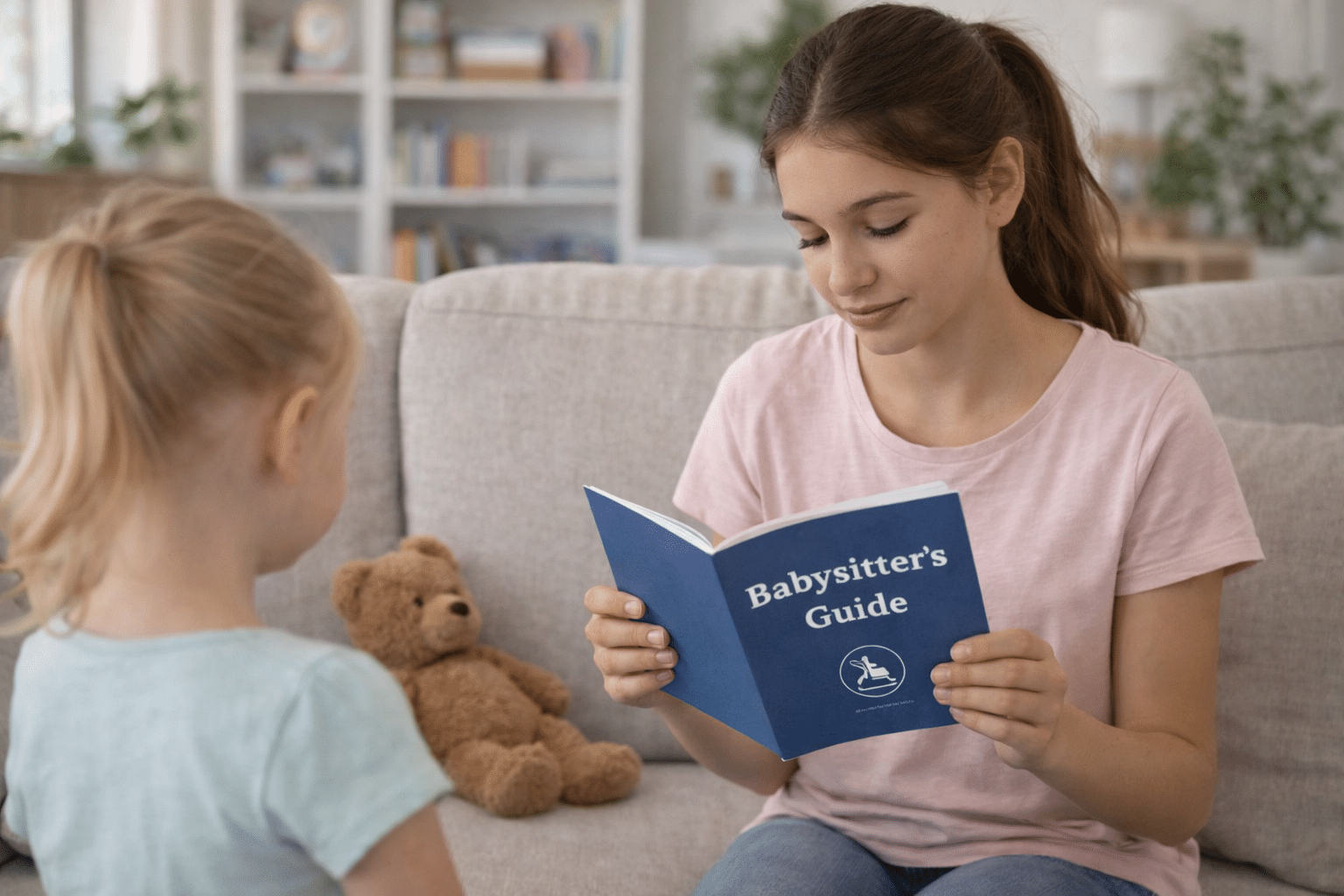
One of the most effective ways to move from “old enough” to “genuinely ready” is to complete a recognized babysitting program. The Red Cross Babysitting course is one of the most widely respected options available to young Canadians. It’s designed for participants between the ages of 11 and 15 and covers the practical skills that matter most on the job. The course includes:
- Child care basics for infants and toddlers, including feeding and soothing
- How to handle choking, minor injuries, fevers, and other common situations
- First aid fundamentals, including CPR for babies and children
- Leadership skills and how to set expectations with the families they work for
Completing this kind of training does something that age alone cannot: it gives young babysitters a real framework for decision-making. When a child falls or becomes ill, a trained babysitter knows the steps to take.
SOS 4 Kids delivers the Red Cross Babysitting course as a certified training partner. Our instructors are also certified first aid educators and parents themselves , which means the training reflects real situations, not just textbook scenarios.

Tips for Parents Hiring a Young Babysitter
For parents on the other side of this equation, finding the right babysitter is about more than checking someone’s age. Here are a few ways to make a confident choice:
- Have a conversation first. Ask how they would handle a few realistic scenarios, like a child who won’t stop crying or a doorbell that rings unexpectedly. Their answers will tell you a lot about their judgment.
- Do a trial run. Invite the babysitter over while you’re still home. Watch how they interact with your children and whether they stay engaged and attentive.
- Ask about training. A young person who has completed a babysitting course has shown initiative. That matters.
- Set clear expectations. Write down the routine, emergency contacts, and any household rules before you leave. Clear communication makes the job easier for everyone.
The Right Age Is the Prepared Age
There is no magic number that makes a young person ready to babysit. The age for babysitting that matters most is the age at which a young person has the maturity, the skills, and the training to take on the responsibility safely. For many young Canadians, that starts around 11 or 12 , but it’s built through preparation, not just time.
At SOS 4 Kids, we’re here to support that journey. Whether your child is thinking about babysitting for the first time or you’re looking for structured safety programming through the Red Cross Babysitting course, we’d love to help.

